Tungsten never leaves the ground as a pure white powder. Instead, it arrives as dark, heavy ore mixed with iron, manganese, calcium, silica and many trace metals. So how do producers make Ammonium Paratungstate (APT) from that rock? In short, they run it through a careful chain of mineral processing and hydrometallurgy. This guide follows tungsten step by step, from the mine to the moment clean APT crystals form, and also explains why each stage matters for the quality you receive.
For an overview of the material itself, read our complete guide to Ammonium Paratungstate. Then, to see current specifications, visit the high purity Ammonium Paratungstate product page.
Where It Starts: Tungsten Ores
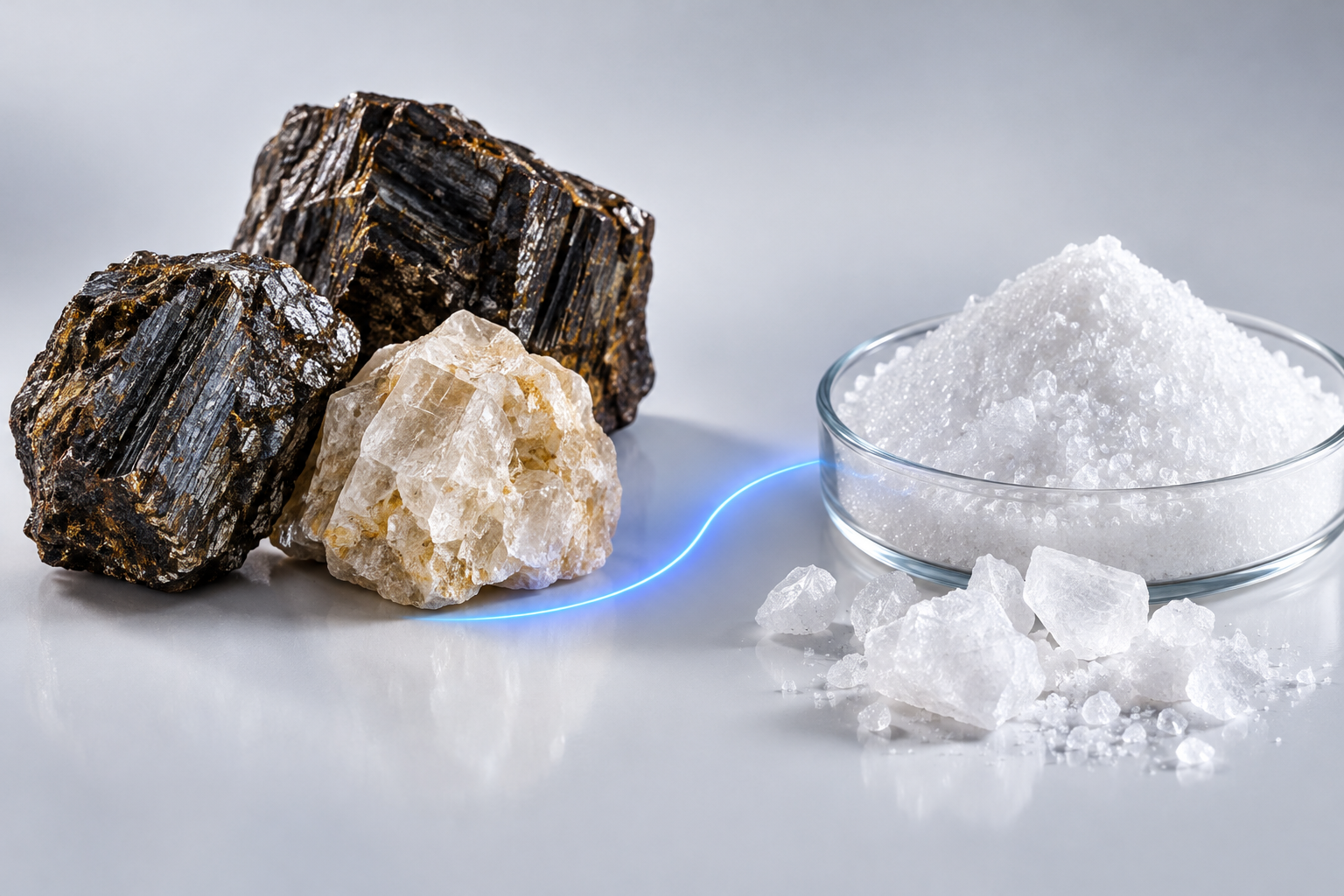
Two minerals supply almost all of the world's tungsten. Because each one behaves differently, producers first identify the ore type and then choose a process route.
Swipe table sideways to see all columns →
| Attribute | Wolframite | Scheelite |
|---|---|---|
| Formula | (Fe,Mn)WO4 | CaWO4 |
| Appearance | Dark brown to black, heavy | Pale cream to white, glows blue under UV |
| Typical concentration | Gravity and magnetic separation | Gravity separation and flotation |
| Typical digestion | Caustic soda (NaOH) | Soda ash or caustic soda under pressure |
Making Ammonium Paratungstate, Step by Step
Plants differ in equipment and chemistry. However, almost all of them follow the six stage route below when they make Ammonium Paratungstate.
The Chemistry Behind Making Ammonium Paratungstate
Digestion turns the tungsten minerals into soluble sodium tungstate. For wolframite, the idealized reaction with caustic soda reads:
Similarly, pressure digestion of scheelite with soda ash gives:
After purification and conversion, evaporation turns ammonium tungstate into Ammonium Paratungstate. In simplified form, the reaction that makes the crystals reads:
In practice, plants usually recover the ammonia that leaves the evaporator and reuse it, so they cut both cost and emissions.
Solvent Extraction vs Ion Exchange
The conversion step is where producers make one of their biggest process choices. Both routes work well, and many modern plants also combine them with extra purification.
Swipe table sideways to see all columns →
| Factor | Solvent Extraction | Ion Exchange |
|---|---|---|
| How it works | An amine based organic phase extracts tungsten from acidified solution, and then ammonia strips it out | Anion exchange resin captures tungstate, and then an ammonium salt solution releases it |
| Strengths | Runs continuously and handles large volumes | Accepts less purified solutions, so it can simplify upstream steps |
| Watch points | Organic solvent handling and losses | Resin capacity, regeneration and effluent volume |
Quality Controls That Matter When Making Ammonium Paratungstate
APT is the last major purification point before tungsten becomes oxide, powder and carbide. Therefore, its quality largely sets the ceiling for everything downstream. As a result, a few process controls make the biggest difference:
To check these results on a supplier's document, see our guide on how to read an APT COA.
Scrap: The Second Source of APT
Primary ore is not the only feed. Recyclers also oxidize tungsten carbide and heavy alloy scrap and dissolve it as sodium tungstate. Then that solution joins the same purification, conversion and crystallization route. Because the United States has had no commercial tungsten mining in recent years, recycled scrap plays an important part in domestic supply. Our APT sourcing guide explains what this means for US buyers.
What Producers Make From Ammonium Paratungstate
Once APT leaves the dryer, most of it goes straight into the next chain. First, producers calcine it to yellow or blue tungsten oxide. Then they reduce the oxide to tungsten powder and carburize that powder into tungsten carbide. You can follow this stage in our article on how producers turn APT into tungsten carbide, or see the oxide stage on our Tungsten Oxide product page.
Frequently Asked Questions
Need High Purity APT, Ready to Ship?
Skip the complexity of refining. Instead, source 99.54% assay Ammonium Paratungstate from Neugen Labs, with nationwide US delivery, bulk quantity and a batch specific COA on request.
This article summarises general tungsten extractive metallurgy and supply context from established industry references. The reactions show idealized chemistry, and actual plant conditions vary by producer.