Yttrium Oxide (Y₂O₃): Properties, Applications, Purity, and Industrial Uses
A technical reference on yttrium oxide for engineers, materials scientists, and procurement teams. It covers what yttria is and where it is used across ceramics, electronics, coatings, and optics. In addition, the guide explains why purity matters and how to choose a supplier when sourcing it.
Yttrium oxide is one of the more quietly important rare earth oxides in modern manufacturing. Choosing a dependable supplier is often the difference between a smooth production run and a costly one. The material shows up in many places. For example, it appears in the ceramics that make dental crowns and cutting tools durable. It also sits in the phosphors behind display and lighting technology, and in the coatings that protect turbine components from heat.
For the engineers and buyers who specify it, the practical questions stay consistent. First, what grade does the application need? Next, why does purity matter so much? Finally, how should you evaluate a supplier?
This guide answers those questions directly. First, it explains what yttrium oxide is. Then it distinguishes the material from others that people often confuse it with. Next, it walks through the major industrial applications. Finally, it sets out what procurement teams should confirm before they place an order.
What Is Yttrium Oxide?
Yttrium oxide, chemical formula Y₂O₃ and commonly called yttria, is the oxide of the element yttrium. It carries the CAS number 1314-36-9. Chemists classify it as a rare earth oxide. In its refined industrial form, it is a fine, white, odorless powder. Moreover, it stays chemically stable, resists most acids, and holds its structure at very high temperatures.
These characteristics make it a workhorse material in advanced manufacturing. Rather than burning as a fuel or reacting as a reagent, yttrium oxide usually goes into a finished material such as a ceramic, a coating, or a crystal. There, its stability and high melting point drive performance directly. Consequently, when suppliers describe the material, they typically reference two figures: the Y₂O₃ assay and the total rare earth oxide (TREO) content.
A note on terminology. Yttrium, yttrium oxide, yttria, yttria-stabilized zirconia, and YAG relate to one another but are not interchangeable. Yttrium is the metallic element. Yttrium oxide (yttria) is its oxide, Y₂O₃. Yttria-stabilized zirconia is a zirconia ceramic that includes yttria as a stabilizer, so it is a distinct material, not yttria itself. YAG (yttrium aluminum garnet) is a separate crystalline compound. This article is about yttrium oxide; it mentions the other materials only to show where yttria fits.
Key Properties of Yttrium Oxide
The following properties are the ones technical users weigh most often when specifying yttria. However, exact figures depend on the grade. Therefore, always confirm them against a supplier's certificate of analysis rather than assume them.
Chemical Composition
Yttrium oxide is Y₂O₃, or two yttrium atoms bonded with three oxygen atoms. As a rare earth oxide, its meaningful composition metrics are the Y₂O₃ purity assay and the TREO content. Together, these describe how much of the material is the intended oxide versus other rare earth or trace constituents. For sensitive applications, moreover, the specific impurity profile can matter as much as the headline purity number.
Purity and Material Quality
Suppliers offer yttria across a range of purity grades, extending to very high purity for the most demanding uses. Optical, laser, and electronic applications generally require higher-purity material, because trace impurities degrade performance. By contrast, certain ceramic or metallurgical uses tolerate somewhat lower grades. In practice, consistent quality from batch to batch often matters as much as the purity figure itself.
Powder Form and Handling Considerations
Suppliers typically ship the material as a white powder. Particle characteristics influence how it behaves during downstream processing. Mixing, pressing, and sintering can all react to powder morphology. So applications with specific processing needs should confirm that the grade suits them. As with any fine powder, appropriate storage, handling, and protective practices apply. Therefore, always refer to the supplier's safety data sheet.
Why Yttrium Oxide Purity Matters
With a material like yttria, the grade you order directly determines whether it will perform in your application. Purity is not an abstract quality metric; it has concrete effects on the finished product. For applications where material purity is critical, Neugen Labs supplies Yttrium Oxide (Y₂O₃) at 99.999% purity (5N).
- Process performance: in optical, laser, and electronic uses, trace impurities can measurably reduce transparency, efficiency, or reliability.
- Material consistency: variation between batches can quietly undermine an otherwise well-controlled production line, producing inconsistent results even when every other input is held constant.
- Contamination considerations: some applications are sensitive to specific contaminants, so the impurity profile, not just the overall assay, can be the deciding factor.
- Application-specific requirements: a grade suitable for a coating may not meet the threshold an optical or semiconductor process demands.
- Procurement specifications: defining the required purity and composition up front lets a supplier confirm suitability and reduces the risk of costly mismatches later.
Major Applications of Yttrium Oxide
Yttrium oxide sits behind a wide range of industrial and technical products. The sections below outline its main application areas.
Advanced Ceramics
A key additive in technical ceramics, notably for stabilizing zirconia to improve strength, toughness, and thermal resistance.
Electronics & Semiconductors
Used in phosphors and specialty electronic materials where consistent optical and electronic behavior is required.
Thermal Barrier Coatings
Applied within high-temperature coating systems that protect components in aerospace and industrial environments.
Optical & Laser Materials
Relevant to optical elements and laser material systems that depend on high transparency and uniformity.
Metallurgy & Specialty Alloys
Used in specialty material systems to support oxidation resistance and refined microstructure.
Specialty Manufacturing
A controlled-composition raw material for a range of advanced-material and research applications.
Advanced Ceramics
In technical ceramics, yttria is best known as a stabilizing agent for zirconia. Adding it changes how the zirconia behaves under stress and temperature. As a result, it produces a tougher, more durable ceramic. Engineers use that ceramic in components that must resist wear and mechanical load. In fact, this is one of the largest and most established uses of the material.
Electronics and Semiconductor Materials
Yttrium oxide appears in phosphors and specialty electronic materials, where its consistent optical response is valuable. In these applications, material grade and purity are closely tied to device performance, so higher-purity yttria is typically specified.
Thermal Barrier Coatings
High-temperature coating systems protect components such as turbine parts from extreme heat. Yttria is relevant within these systems for its heat resistance; the specific coating chemistry and application method determine the exact material specification required.
Optical and Laser Materials
Because high-purity yttria can offer excellent transparency, it is relevant to optical and laser material systems. These applications are among the most demanding in terms of purity and material characteristics, since small imperfections can affect optical performance.
Metallurgy and Specialty Alloys
In specialty alloy and material systems, yttria is used to support properties such as oxidation resistance and grain refinement. The precise requirement depends heavily on the target alloy and application.
Yttrium Oxide in Zirconia-Based Ceramics
One of the most important roles for yttrium oxide deserves a closer look. Zirconia (zirconium dioxide) is a valuable ceramic. However, on its own, it changes crystal structure as it heats and cools. Those transitions can crack the material. Adding a stabilizer such as yttria locks the zirconia into a more stable structure. As a result, it keeps its strength and toughness across a wider temperature range.
The result, yttria-stabilized zirconia, appears wherever a ceramic needs to be both hard and fracture-resistant. Common examples range from dental restorations to industrial wear components. It is worth restating that yttria-stabilized zirconia is a distinct engineered material. In other words, yttrium oxide is the stabilizing ingredient added to the zirconia, not the ceramic itself. For buyers, this distinction matters. After all, the yttria feedstock has its own purity and consistency requirements, and those feed directly into the quality of the finished ceramic.
Yttrium Oxide (Y₂O₃)
- Formula
- Y₂O₃
- CAS Number
- 1314-36-9
- Listed Purity
- 99.999%
- TREO
- 99.601%
- Packaging
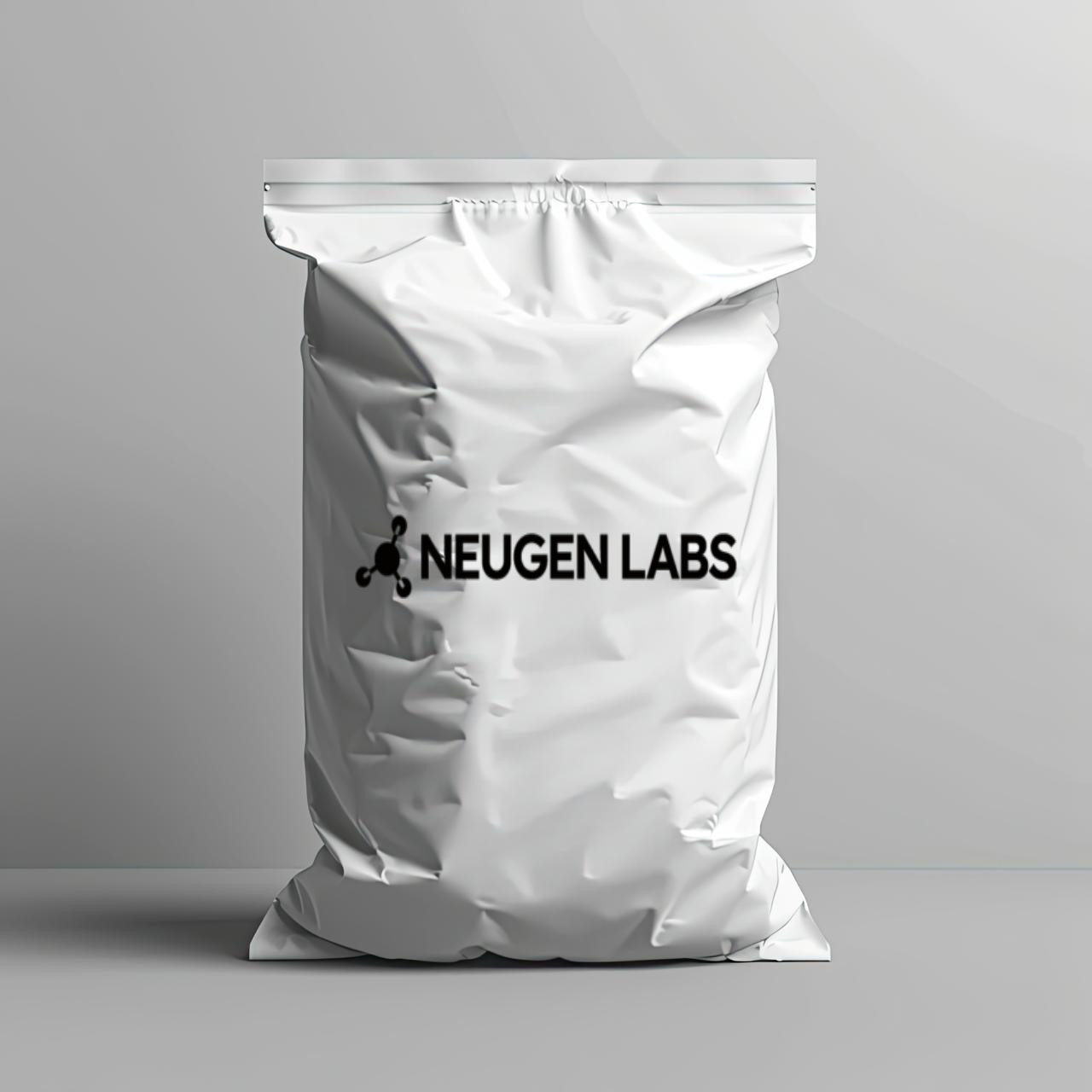
- 25 kg bags
- Appearance
- White powder
What Should Buyers Consider When Sourcing Yttrium Oxide?
Sourcing a technical material well starts with defining the requirement precisely. The checklist below covers the points procurement teams should confirm before requesting a quote or placing an order.
- Chemical identity: confirm the material, formula (Y₂O₃), and CAS number (1314-36-9).
- Purity requirement: define the Y₂O₃ assay and any TREO or impurity limits the application needs.
- Application requirements: identify what the material must do so the right grade can be matched.
- Particle characteristics: where processing is sensitive to powder morphology, specify it.
- Packaging: confirm packaging suits your storage and handling; the product is listed in 25 kg bags.
- Quantity: state whether the need is lab-scale, bulk, one-time, or recurring.
- Documentation: request certificates of analysis and safety data for verification.
- Supply consistency: confirm the supplier can hold specification across batches.
- Delivery requirements: align on logistics, timelines, and shipping needs.
- Supplier communication: assess how clearly and promptly technical questions are handled.
How to Choose a Yttrium Oxide Supplier in the USA
Beyond price, one question matters most. Can the supplier deliver the right specification consistently, and support you when an application has specific demands? Industrial buyers generally weigh several factors. These include clear product specifications, quality consistency, adequate supply capability, and suitable packaging options. They also value dependable logistics, responsive technical communication, and a straightforward quotation process. Above all, they look for a demonstrated understanding of application suitability. Because yttrium is a rare earth element with a complex global supply chain, these factors carry real weight. As additional background on sourcing, the Royal Society of Chemistry offers a helpful overview.
For organizations sourcing yttrium oxide in the USA, a U.S.-based operation offers clear advantages. It simplifies logistics, shortens lead times, and makes documentation more direct. Neugen Labs, for example, acts as a domestic supplier from its operation in Tampa, Florida. In addition, it publishes product specifications and quotation support on its Yttrium Oxide product specifications page.
Application and Buyer Considerations at a Glance
| Application | Why Yttrium Oxide Is Used | Key Buyer Consideration |
|---|---|---|
| Advanced ceramics | Zirconia stabilization and material performance | Purity and batch consistency |
| Thermal barrier coatings | High-temperature material systems | Application-specific specification |
| Electronics | Specialty electronic materials and phosphors | Material grade and purity |
| Optical & laser materials | Optical and laser material systems | Required material characteristics |
| Metallurgy | Specialty alloy and material applications | Application-specific requirements |
Yttrium Oxide Supply and Packaging Considerations
For industrial procurement, packaging and supply logistics are practical parts of the decision, not afterthoughts. The product page lists Yttrium Oxide in 25 kg bags, a format suited to industrial handling. When planning a purchase, align quantity, packaging, and delivery expectations with the supplier early. In addition, confirm whether the requirement is a single order or an ongoing supply relationship. After all, that choice can affect planning on both sides.
Why Work With Neugen Labs for Yttrium Oxide?
Neugen Labs is a U.S.-based supplier of Yttrium Oxide (Y₂O₃) for industrial and technical applications. When sourcing yttrium oxide, purity is an important consideration, because trace impurities can affect performance in sensitive applications.
For applications where material purity is critical, Neugen Labs supplies Yttrium Oxide (Y₂O₃) at 99.999% purity (5N). The material is available from US stock, providing a domestic sourcing option for organizations purchasing yttrium oxide in the United States. It publishes the product identity, listed purity, TREO, and packaging on its product page.
For buyers who value a domestic supplier with specifications and quotation support in one place, the product listing is the most direct starting point. You can view Yttrium Oxide for current details, including the 99.999% (5N) specification. Alternatively, contact the Neugen Labs team to discuss purity, quantity, packaging, and application requirements.
Frequently Asked Questions
What is yttrium oxide?
What is the chemical formula of yttrium oxide?
What is yttrium oxide used for?
Why is yttria used to stabilize zirconia?
What industries use yttrium oxide?
Does yttrium oxide come in powder form?
What should I check before purchasing yttrium oxide?
How can I request a quotation for yttrium oxide in the USA?
Need Yttrium Oxide for an Industrial or Technical Application?
Review the available product specifications, or contact Neugen Labs to discuss your purity, quantity, and application requirements.